Signed, numbered, proof: how to read the details of a limited edition print
What "signed and numbered in pencil, 55/100" tells you, what an artist's proof is, and why a Piper print has a Levinson number.
3 min read
Look at any print on our Recent acquisitions page and under the title you will find a line or two of detail: "Signed and numbered in pencil, 55/100", "A unique artist's proof", "Levinson No. 213". Those few words matter as much as the picture when you are deciding what to buy, so here is what they mean.
Signed in pencil
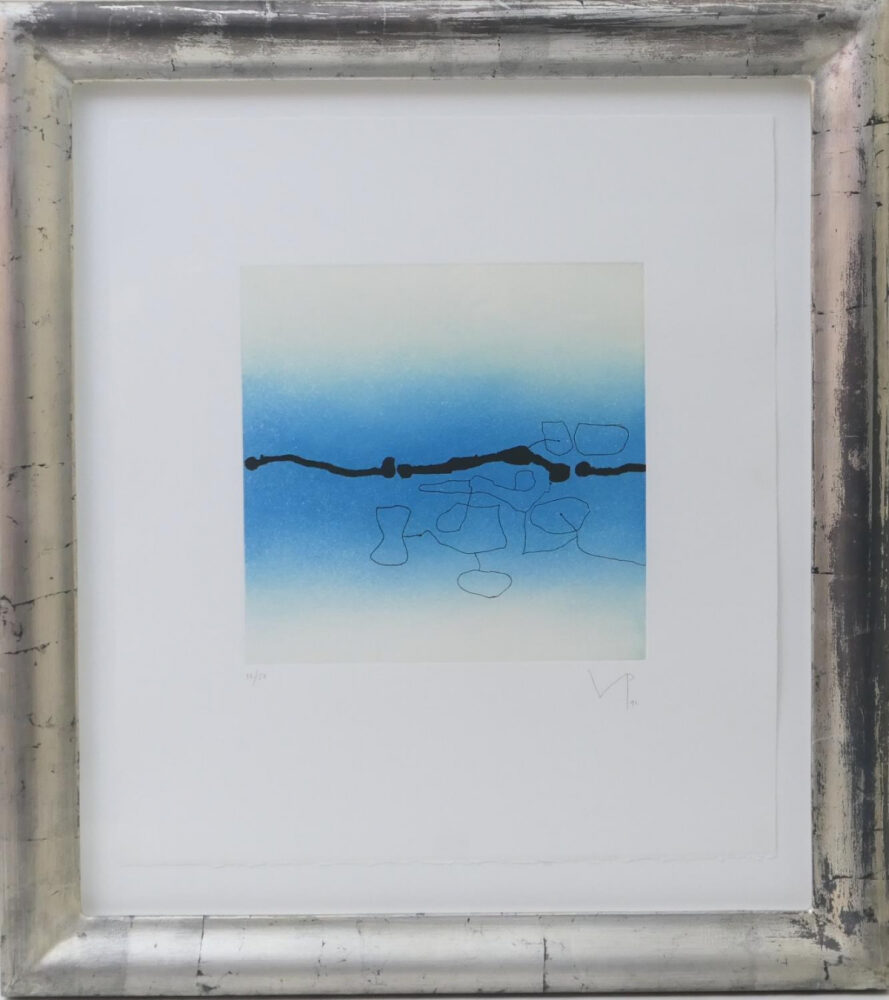
An artist signs a print by hand, almost always in pencil, in the margin below the image, usually at the bottom right. A pencil signature cannot be printed, so it shows the artist saw and approved that sheet. A signature that is part of the printed image ("signed in the plate" or "signed in the screen") is a different thing, and a print signed only that way is generally worth less than one signed by hand.
Numbered
A limited edition is a set number of prints pulled from the same plates or screens, after which no more are made. "55/100" means this is number 55 of an edition of 100. People often ask whether a low number is better. With modern screenprints and lithographs, where every sheet is printed the same way, the number makes little or no difference. With etchings it can matter a little, because a copper plate wears as it is printed.
The size of the edition matters more. Fifty impressions of a print will usually be harder to find than eight hundred and fifty.
Proofs
Alongside the numbered edition, a small number of extra impressions are often printed for the artist and the printer. These are marked "A/P" or "artist's proof", and sometimes "P/P" for the printer. They are the same image on the same paper, and collectors like them, partly because there are so few. You may also see words such as "Archive" written on a sheet, like the Gillian Ayres screenprint we have marked "Archive 2, aside from the edition of 15".
Catalogue numbers
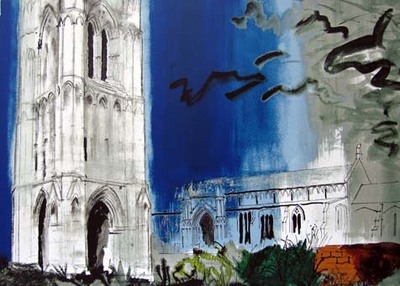
The prints of many important artists have been listed in a catalogue raisonné, a book that records every print they made, with its date, size, edition and printer. John Piper's prints are catalogued by Orde Levinson, so a Piper print is often described by its Levinson number. L.S. Lowry's signed prints are listed in Henry Donn's book on his limited editions. A catalogue number lets you check that what you are looking at matches what was published.
The blind stamp
Some prints carry a small embossed mark in the margin with no ink in it. On a Lowry print, that is usually the stamp of the Fine Art Trade Guild, which was applied to limited editions it approved. Printers and publishers have blind stamps of their own too.
What we tell you
When we describe a print, we give you everything we know: how it was made, how it is signed and numbered, its size, its catalogue number and where it came from. If something is not on the page, ask us and we will tell you.
See the prints in the gallery now
Screenprints, lithographs and etchings by Piper, Lowry, Heron, Scott and more.
Recent acquisitions