Screenprint, lithograph or etching? What the words mean
Three ways of making an original print, how each one works, and what to look for when you have one in front of you.
2 min read
An original print is not a copy of a painting. It is a work of art in its own right, made by the artist on a screen, a stone or a metal plate, and printed by hand. Most of the prints in the gallery were made in one of three ways, and each gives a different kind of picture.
Screenprint
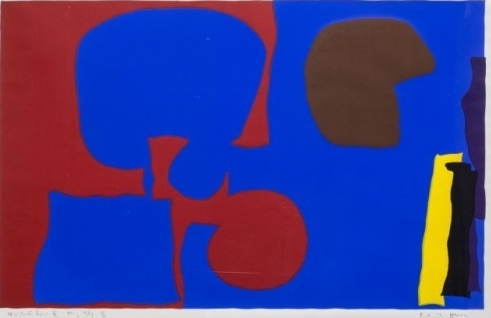
A screenprint is made by pushing ink through a fine mesh stretched on a frame. Parts of the mesh are blocked so that ink only passes where the artist wants it, and each colour has its own screen. The result is flat, even, intense colour lying on the surface of the paper.
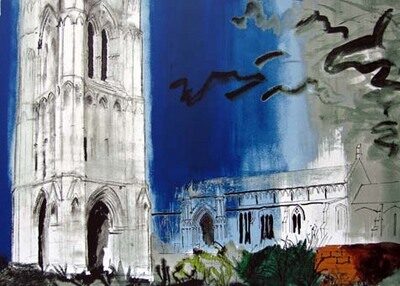
That is why screenprinting suited the painters of colour: Patrick Heron's Winchester series of 1967, John Hoyland's blazing abstracts, Gillian Ayres and Wilhelmina Barns-Graham. John Piper used it too, building up his castles and churches layer by layer.
Lithograph
Lithography works because grease and water do not mix. The artist draws with a greasy crayon or ink on a stone or a metal plate, the surface is dampened, and the ink sticks only to the drawing. A lithograph can look like a drawing in chalk or a wash of watercolour, with soft edges and texture, which is why so many painters loved it. William Scott's still lifes, Henry Moore's figures and Mary Fedden's tables of fruit were often made this way, and L.S. Lowry's signed prints are lithographs.
Etching
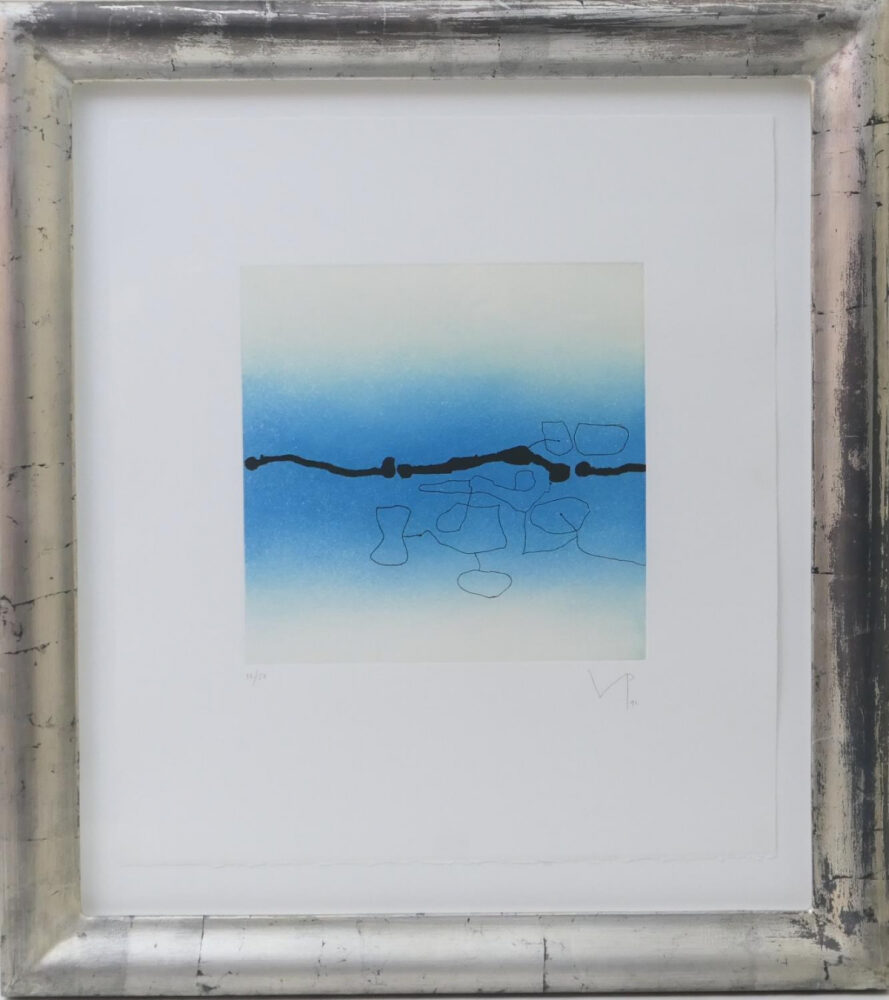
An etching is printed from a metal plate, usually copper or zinc. The artist draws through a waxy coating with a needle, and the plate is put in acid, which bites lines into the metal wherever the coating has been scratched away. Ink is wiped into those lines and pressed onto damp paper. Aquatint is a related technique that bites tones rather than lines.
An etching often has a fine, crisp line and a slightly raised feel, and you can usually see the edge of the plate pressed into the paper, called the platemark. Victor Pasmore's later prints are etchings and aquatints, and so is Mary Fedden's Pear & Jug.
How to tell them apart
- Look at the edge of the image: a platemark pressed into the paper means an etching or another intaglio print.
- Look closely at the colour: solid, flat colour with crisp edges usually means a screenprint.
- Look for texture like chalk or crayon on paper: that suggests a lithograph.
The easiest way to learn is to look at them side by side, so do come into the gallery and we will show you.
Visit the gallery
Come to 3 The Square, Church Stretton, and see the prints for yourself.
How to find us